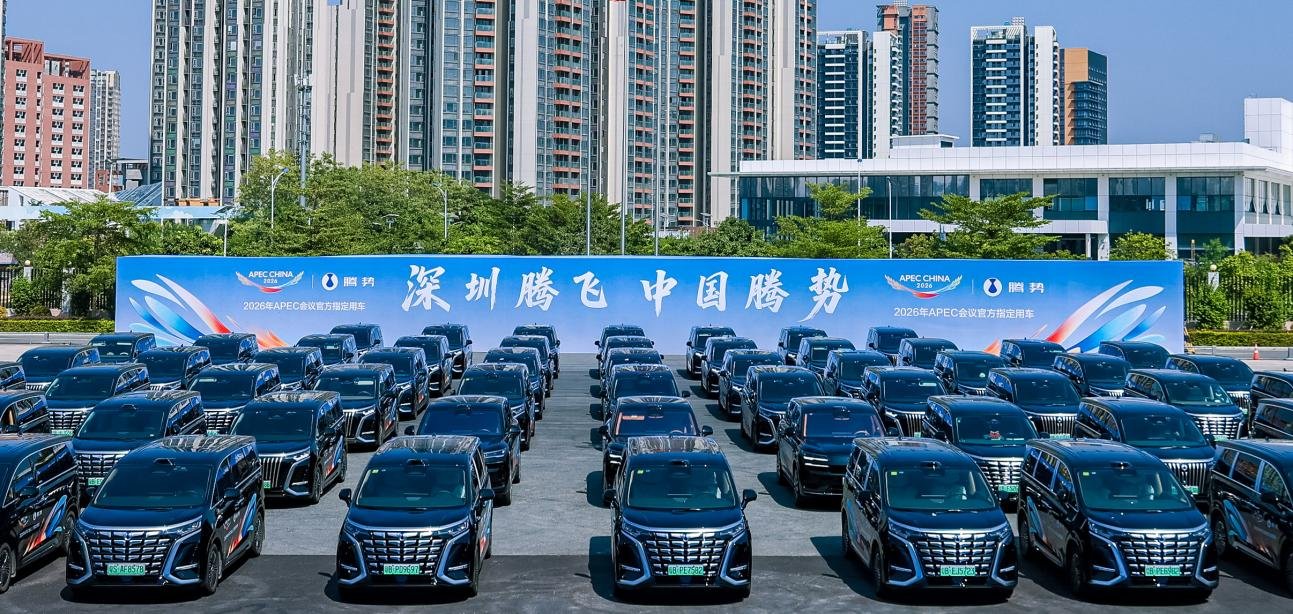
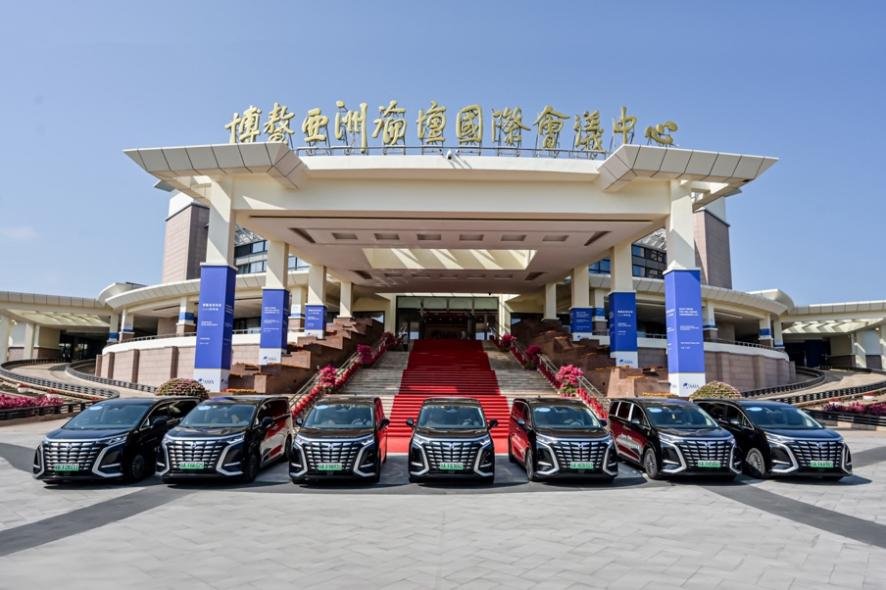
Recently, there was a piece of news in the automotive circle, neither big nor small: the APEC meeting in November will be held in Shenzhen, BYD secured the official partner status, and Denza Auto won the bid for travel service support, providing nearly 700 vehicles, of which the second-generation Denza D9 alone accounts for more than 600, providing protocol services for senior official delegations from 21 economies.
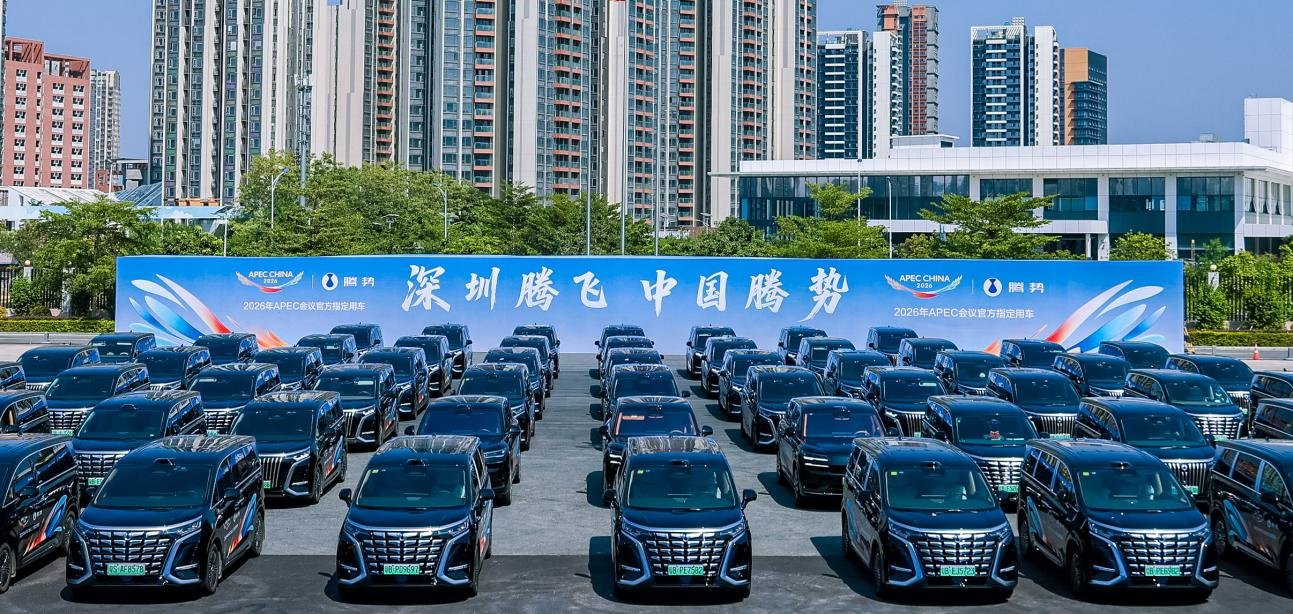
This kind of news used to be something people just watched for fun and moved on, but as a blogger who has long focused on the MPV segment, I think this matter is worth taking apart and discussing a bit—why is it that for a "zero-fault-tolerance" scenario like receiving foreign guests, the final choice is a new energy MPV? Behind this is actually an extreme stress test of product strength.
1. Official vehicles are not "badge-sticking," but an all-round major exam
Many people do not understand why an officially designated vehicle is worth writing about at length. Actually, if you think about it from another angle: the requirements for vehicles in foreign guest reception scenarios are much stricter than those for family cars—
Time cannot be delayed: schedules are precise to the minute, energy replenishment must be fast, and the agenda cannot be delayed because of charging;
The passengers are either rich or noble: comfort is the bottom line, and any shortcoming in NVH, seats, or suspension texture will be infinitely magnified;
Road conditions are uncontrollable: coastal crosswinds in Shenzhen, sudden tire blowouts, continuous high-frequency vehicle use—safety redundancy must be maxed out;
Image is national strength: the vehicle itself is a "mobile exhibition stand" of the host country's industrial level.
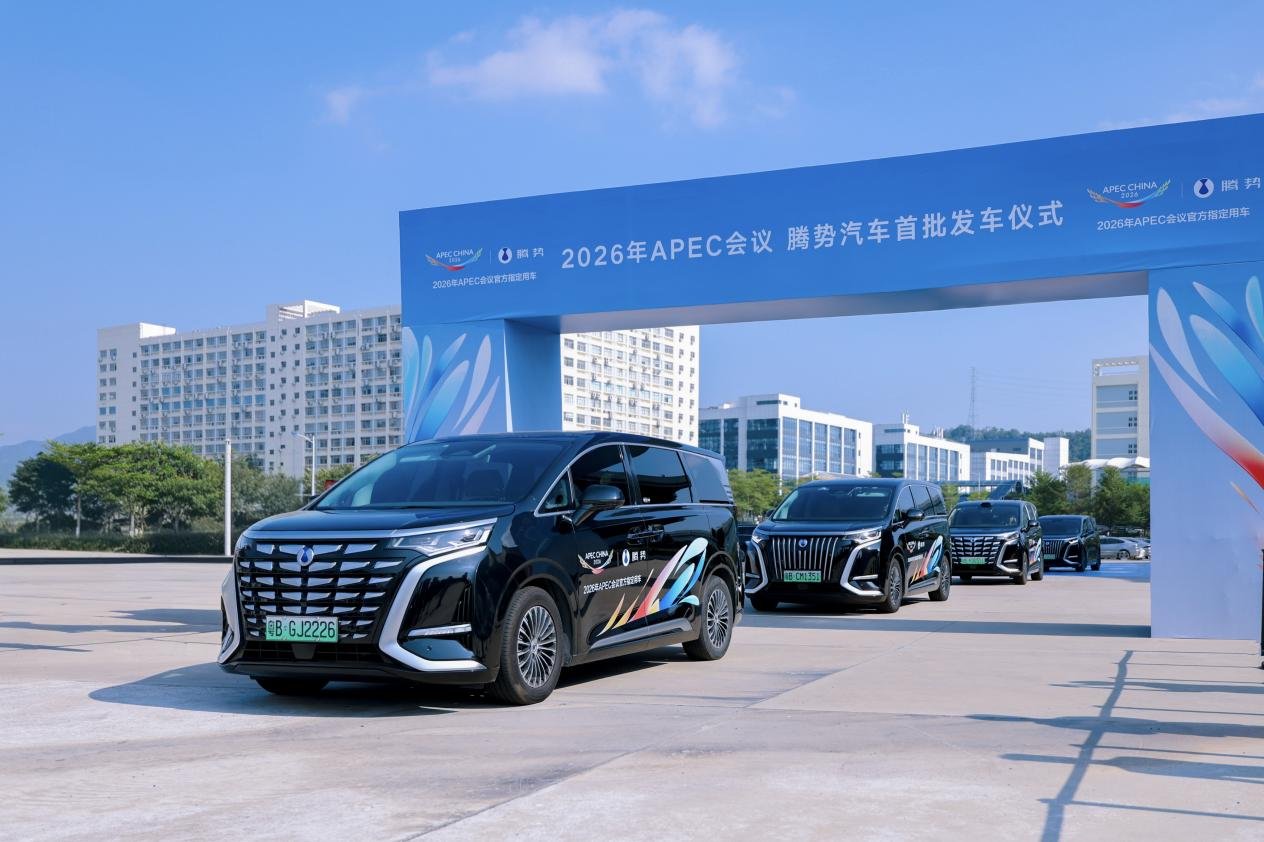
Therefore, for a car to enter the protocol fleet, its product strength must have no obvious shortcomings. This is also something I often say: the official reception market is a "mirror that reveals demons" for automotive product strength; any marketing packaging is useless here.
2. Where exactly is the product strength of the second-generation Denza D9 strong?
Back to the car itself. The second-generation Denza D9 was able to win in this bidding, and the core still lies in several hard indicators:
1. Energy replenishment: charged in 5 minutes, fully charged in 9 minutes
Equipped with the second-generation blade battery plus flash charging technology, the official data is charged in 5 minutes and fully charged in 9 minutes, with only 3 extra minutes even at minus 30 degrees low temperature. What does this mean? Every morning before the protocol fleet sets out, the energy replenishment time is basically on par with refueling a fuel vehicle, completely solving the biggest pain point of electric MPVs for official reception—the energy replenishment rhythm cannot keep up with the high-intensity continuous schedule.
2. Safety: high-strength steel + tire blowout stability control, providing a fallback for extreme conditions in advance
A 75% high-strength steel body and 9 airbags are only the foundation. What I value more are the two active safety technologies: iCWC crosswind stability control and high-speed tire blowout stability control. Shenzhen is close to the sea, and there are many crosswind sections in autumn; high-speed tire blowout is one of the most dangerous accident causes in fully loaded MPV passenger scenarios. Doing separate technical redundancy for these two low-probability, high-harm scenarios shows that the engineers are truly developing according to the working conditions of official vehicles.
3. Comfort: from "obedient" to "understanding you"
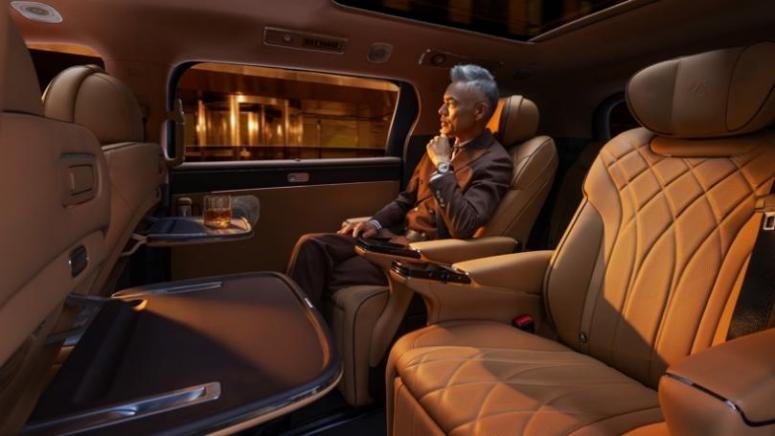
Inside the cabin, the AI agent "Didi Xia" handles interaction, the semi-aniline leather cloud velvet seats achieve a 15-layer structure plus 16-point massage, and are paired with dual-valve Cloud Chassis-C and road preview 2.0. The logic of this combination is very clear: after the VIP gets in the car, bumps, fatigue, and operation costs all drop to zero. In reception scenarios, the driver is best "invisible," and the passenger is best "imperceptible"; this chassis and cabin are aimed exactly at this goal.
3. Why Denza? Necessity within contingency
From the market perspective, this choice is not surprising either. Since the Denza D9 was launched in 2022, cumulative sales have exceeded 350,000 units, and it has won the China MPV sales champion for three consecutive years in 2023, 2024, and 2025. It is the world's first new energy MPV to reach this magnitude. Sales cannot explain everything, but at least they prove that it has passed the vote of real money among the most demanding MPV consumer group—business owners and family users.
What is more interesting is the owner profile: the Financial Secretary of Hong Kong, Sino Group Chairman Robert Ng, Wang Leehom, Pan Xiaoting... These people, who are used to million-level rides, choose the D9 for daily commuting. The hardest part of protocol scenarios is to keep "people who are used to riding in good cars" from nitpicking, and the existence of this group of users itself is the highest endorsement of the D9's comfort and quality.
Moreover, in 2026, the Denza D9 has already served the Boao Forum for Asia, the China-ASEAN Expo, the Summer Davos, and the APEC Forestry Ministerial Meeting, which is equivalent to having gone through a whole year of "practical drills" in advance. APEC choosing it is not a risk, but a matter of course.
4. Final thoughts: the significance of this car goes beyond the car itself
Finally, something macro. APEC lands in Shenzhen, and cars made in Shenzhen serve the conference held in Shenzhen. Behind this closed loop is the maturity of China's entire new energy vehicle industry chain.
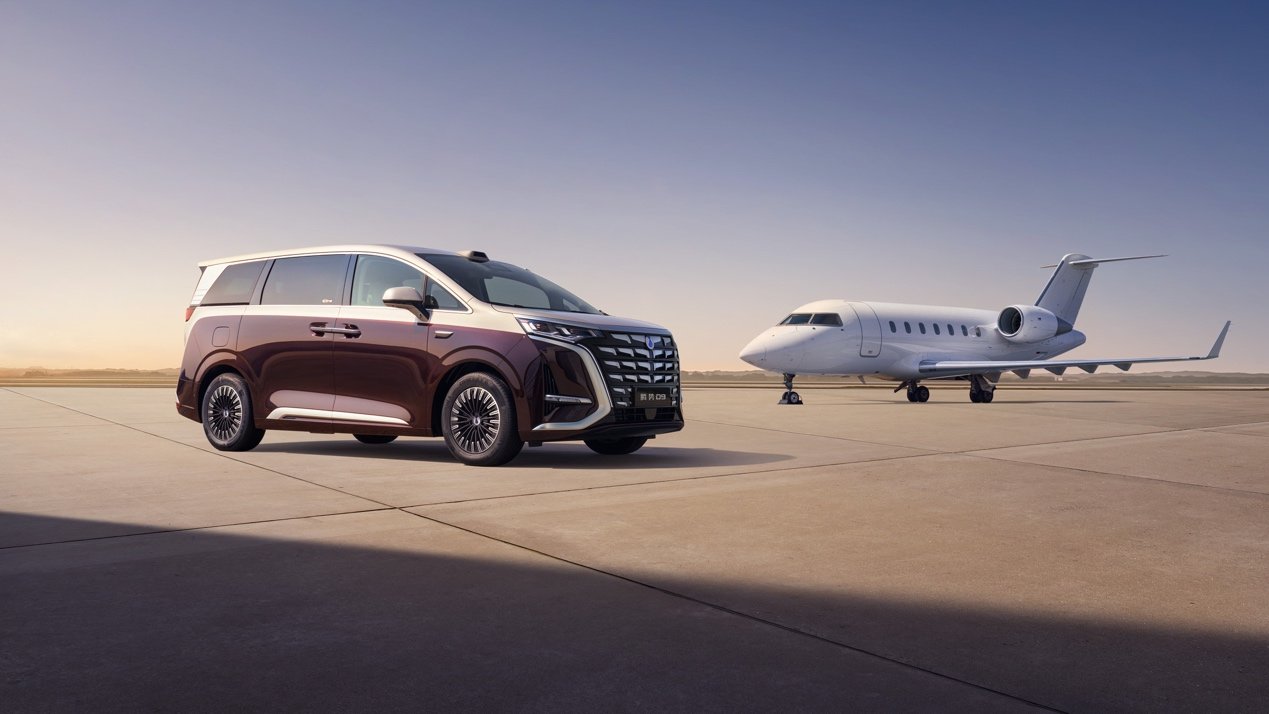
Ten years ago, Chinese brands were almost invisible on the protocol fleet lists of international grand events; ten years later, a new energy MPV can stand on this stage with a scale of nearly 700 vehicles. From "Made in China" to "Intelligently Made in China," the role the Denza D9 plays this time is, to some extent, a microcosm of the upward development of China's automotive industry over decades.
Of course, as a blogger I still say the same thing: honors are a bonus, product strength is the fundamental base. APEC is a mirror. During the November meetings, every pickup and drop-off of these more than 600 D9s will be watched by global media.
This major exam, we wait and see